


The islets of Menorca are proof that even an island sometimes needs a little space. Scattered along the coast and tucked inside its harbours, these smaller islands seem to have stepped politely aside for some peace and quiet. As if Menorca itself were not already a fairly good place to find it.
Some have lighthouses. Others have old hospitals, naval quays or tiny residents with an enviable view. Several can be part of a cultural outing; others are best admired from the shore or the water.
Here are eight small islands around Menorca, with photographs, a little history and a few reasons to look more closely next time you spot something on the horizon. There is usually more to it than “that rock over there”.
1. Illa d’en Colom: the Mediterranean showing off
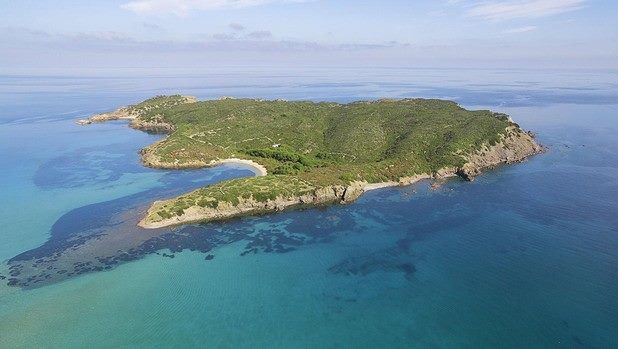
Just off Es Grau, Illa d’en Colom brings together several of Menorca’s best qualities: little beaches, green slopes and water that seems to work its way through every shade of blue. Seen from above, the contrast between sand, rock and sea is rather hard to improve upon.
The island forms part of the landscape of s’Albufera des Grau Natural Park. Arenal d’en Moro is one of its best-known corners, featured in the Balearic Government’s geological itinerary around Illa d’en Colom. It has taken millions of years to produce this scenery. It takes most visitors considerably less time to decide they would like to stay.
Discover it with care for the natural environment and check access arrangements before setting out. The scenery is reliable; the wind is under separate management.
2. Isla del Aire: a lighthouse and some very small locals
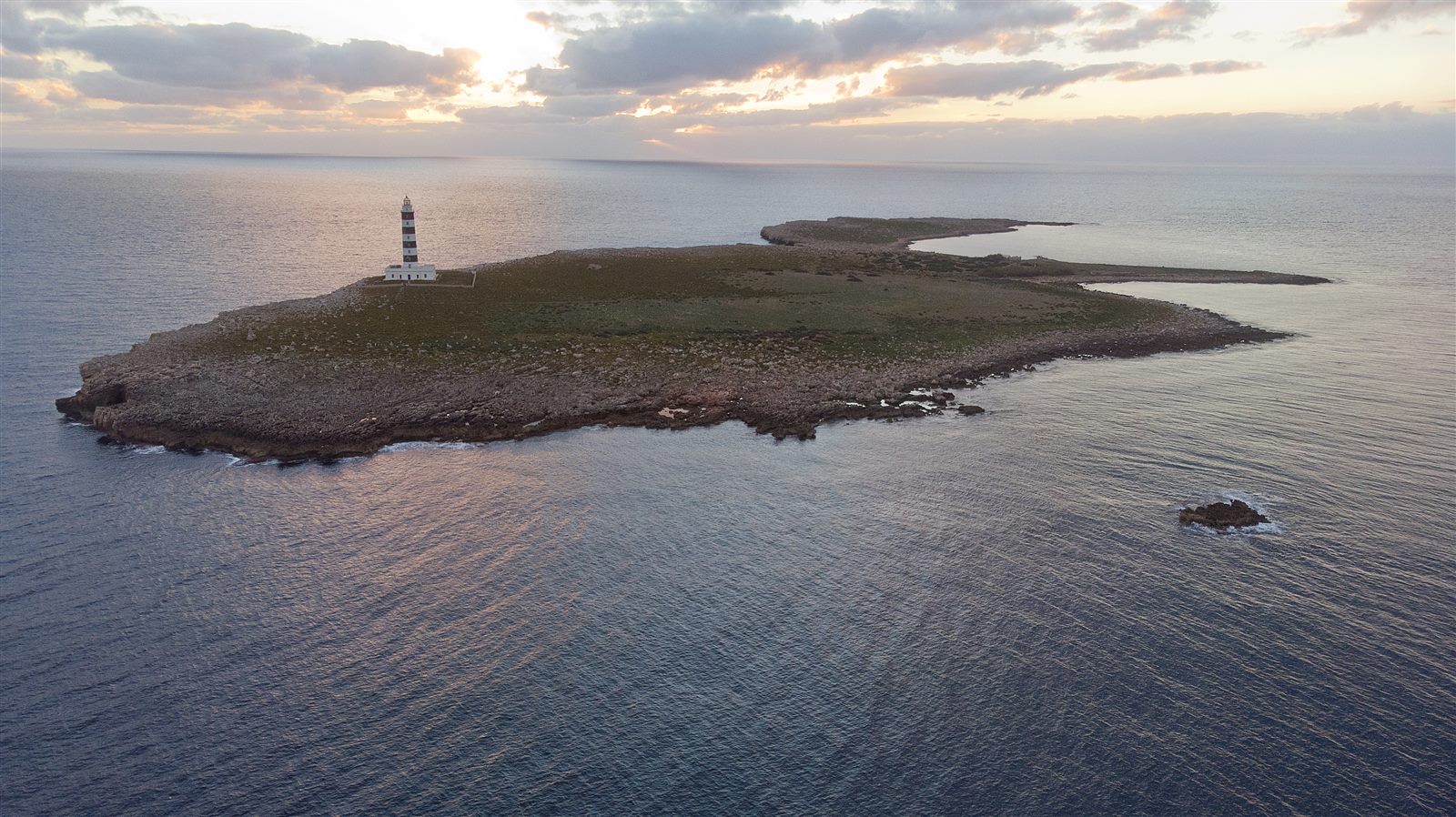
Look out to sea from Punta Prima and you will spot Isla del Aire, or Illa de l’Aire, with its unmistakable black-and-white lighthouse. It is one of those views that makes sitting on a bench feel like an entirely worthwhile afternoon.
The island’s other celebrities are much closer to the ground: its black Balearic lizards. The lighthouse and the island’s lizard population are part of what makes this place so distinctive. The lizards have an excellent address, uninterrupted sea views and no apparent interest in selling.
You do not need to land on the island to enjoy it. From Punta Prima, its silhouette is a constant companion, changing with the light while the lighthouse quietly gets on with its job.
3. Isla del Rey: a rather civilised way to arrive at an art gallery
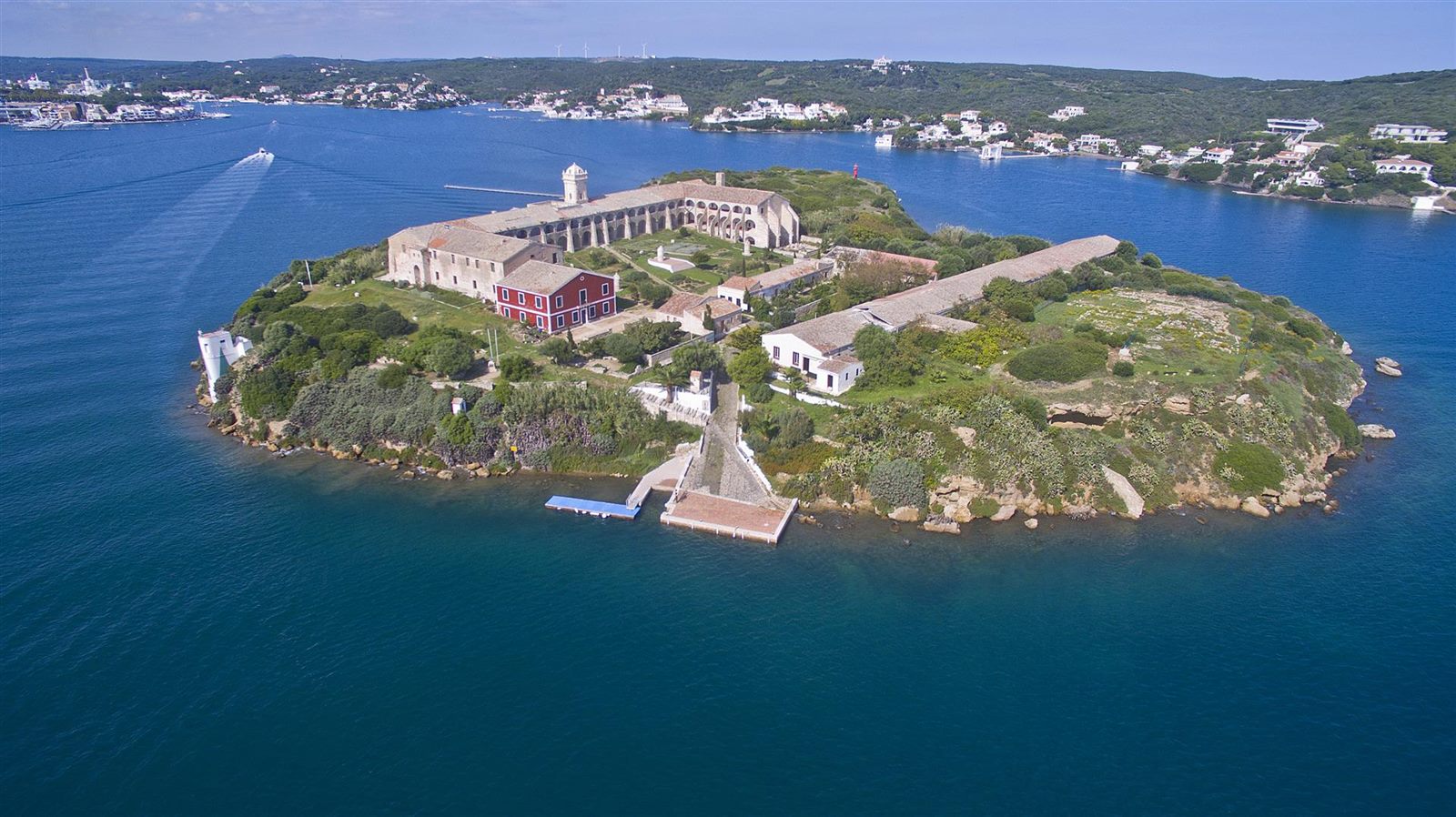
In Mahón harbour, Isla del Rey —also known as Illa del Rei— swaps beach scenery for historic buildings. Its former naval hospital and the work to restore it offer a fascinating glimpse into the harbour’s past.
There is a contemporary side, too. Hauser & Wirth Menorca presents exhibitions and activities in restored buildings within the hospital complex. A short boat journey, a little history and an art exhibition make a pleasing combination.
Arriving at a gallery by sea also gives the day a certain sense of occasion. Even if you are not entirely sure what to make of the art, you have at least made an excellent entrance. Check the current opening dates and boat timetable when planning your visit.
For more on this side of the island, read our guide to contemporary art in Menorca.
4. Lazareto Island: when arriving in Menorca took patience
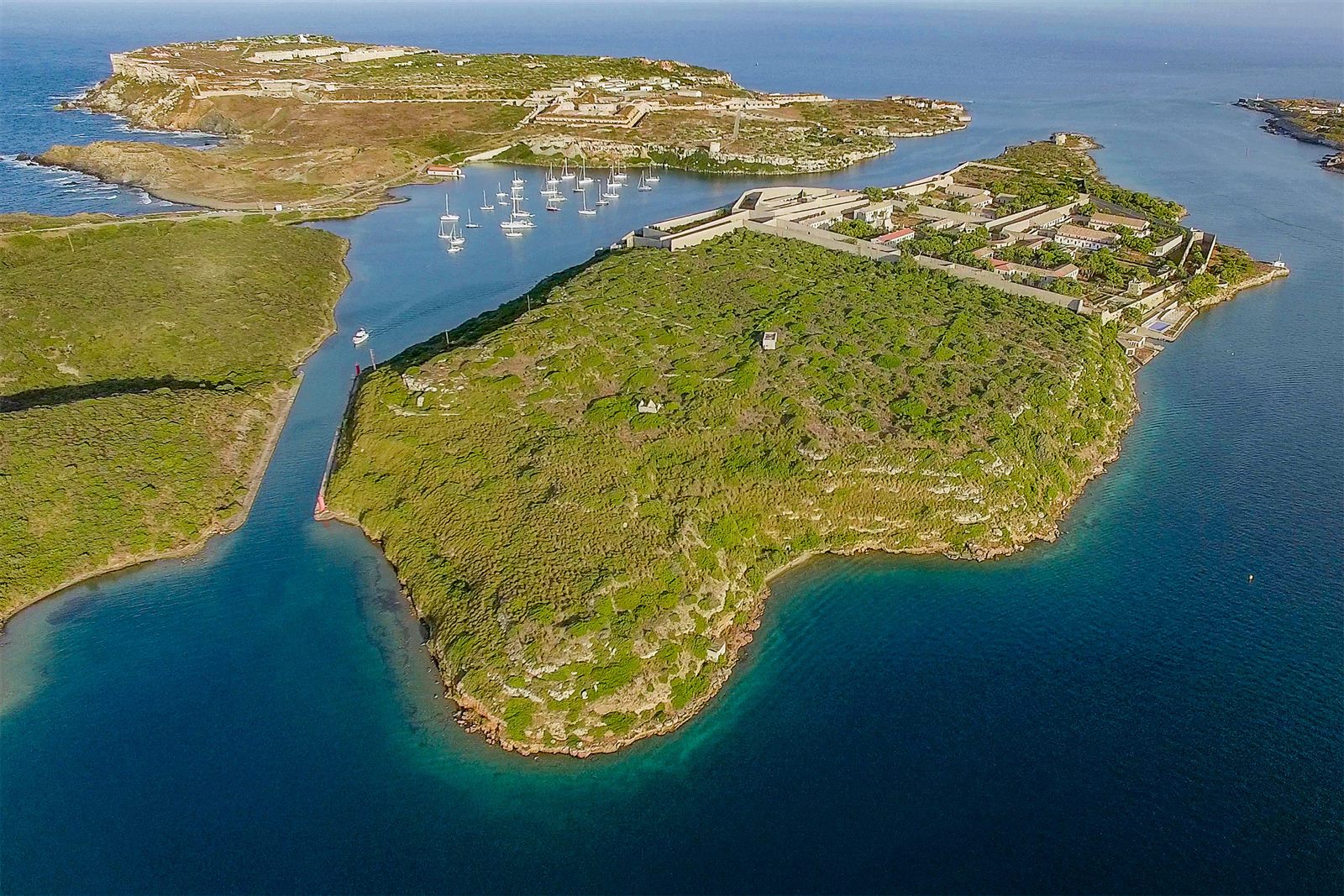
Also in Mahón harbour, Lazareto Island, or Illa del Llatzeret, tells a rather different story about arriving by sea. Its historic complex was designed for quarantine and the control of infectious disease.
Seeing Menorca from a ship did not always mean being free to step ashore and find lunch. Those long waits put the occasional delay at baggage reclaim into perspective.
Today, scheduled visits offer a way to explore this chapter of the island’s past. The Consell de Menorca’s introduction to the Lazareto explains its original purpose. Check the official visitor information for current availability and booking arrangements.
From above, the enclosed buildings, vegetation and surrounding water form an extraordinary pattern. It is a small island with a surprisingly substantial story.
5. Pinto Island: a small island with serious naval credentials
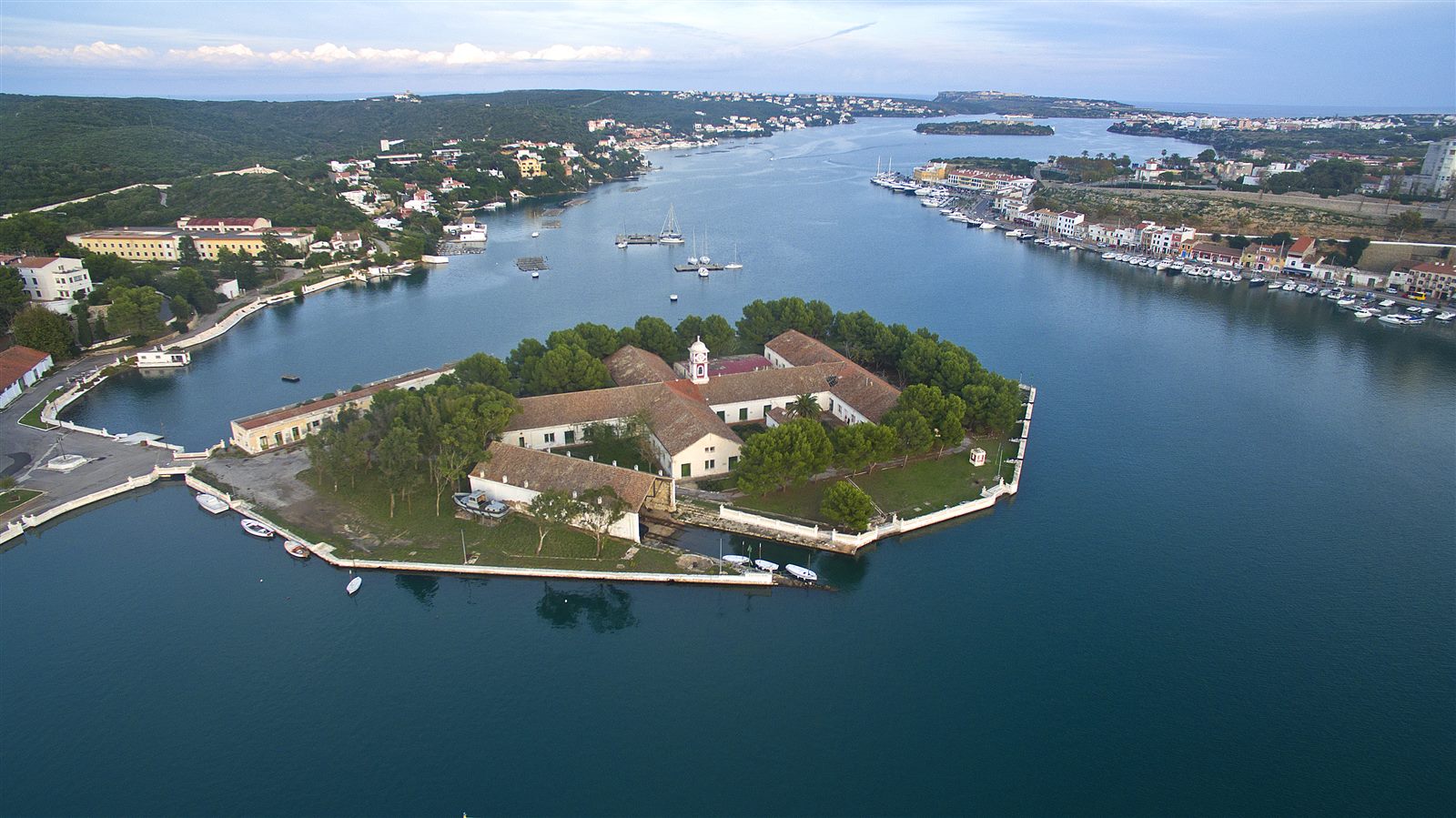
With its neat outline, quays and buildings, Pinto Island looks almost like a model set down in the harbour. Its history, however, involved rather more than looking attractive from a passing boat.
Closely associated with Mahón’s naval dockyard and Menorca’s British period, Pinto recalls a time when the harbour was a place of shipbuilding, repairs and strategic importance. The British, it seems, appreciated a good Menorcan harbour long before anyone thought to book a summer holiday.
The island is within the naval base and is listed as not open to the public in Menorca’s British heritage guide. This is one to admire from outside, letting the quays and buildings do the storytelling.
6. Illa de ses Sargantanes: another reason to linger in Fornells
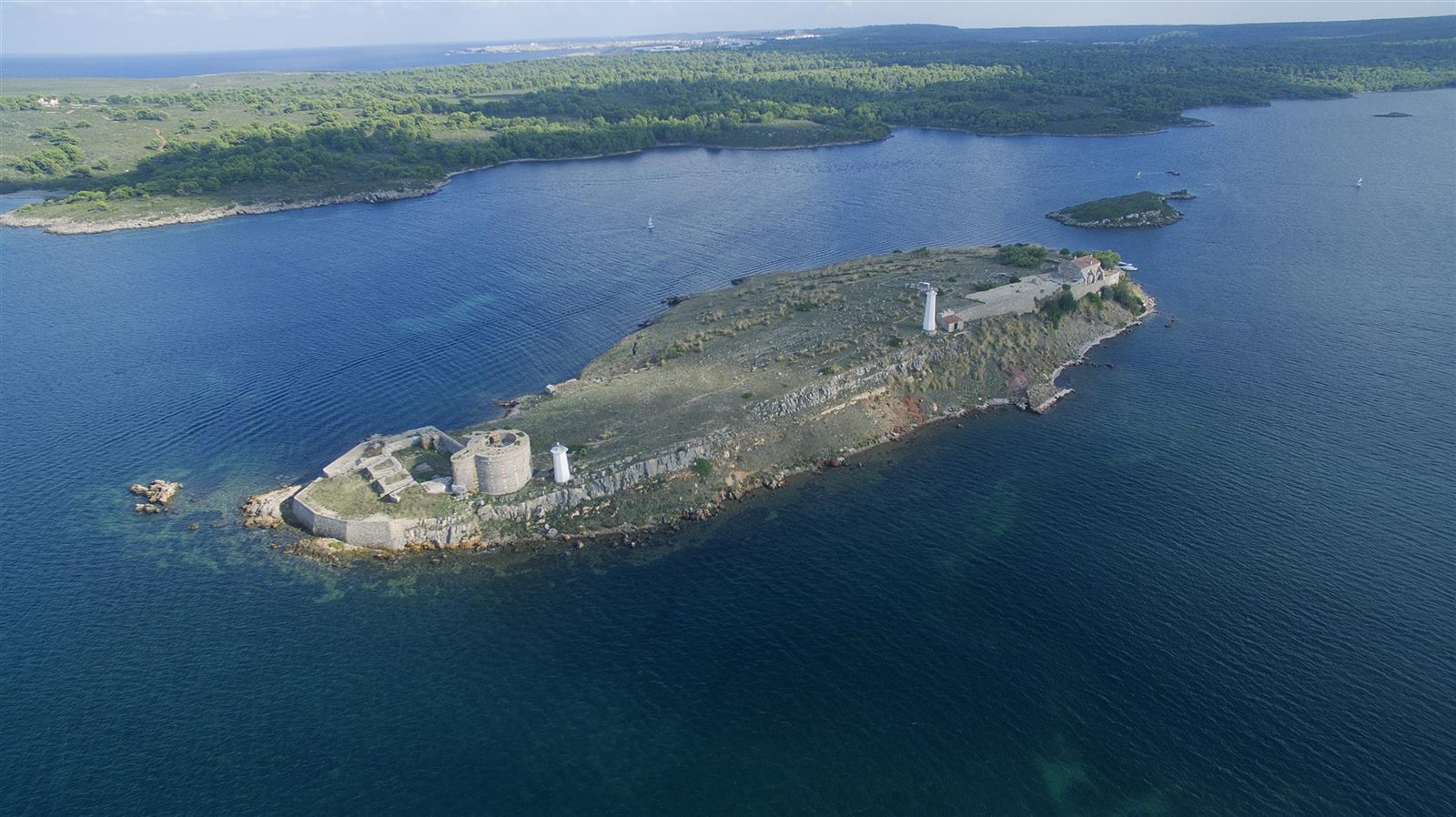
Within Fornells bay, Illa de ses Sargantanes —also called Illa de la Sargantana— adds another layer to the view. Its long outline and surviving buildings give this small patch of land a character of its own.
The name refers to lizards, and Menorca’s offshore islets provide important refuges for them. The Biosphere Reserve’s population monitoring helps explain their significance. Small residents, considerable importance.
Fornells is understandably famous for its lobster stew. Still, it is worth looking up from the menu occasionally. The bay has plenty to reward an unhurried look, and Ses Sargantanes is a lovely reminder that the scenery deserves a little attention of its own.
7. Illa des Porros: where the north coast keeps things simple
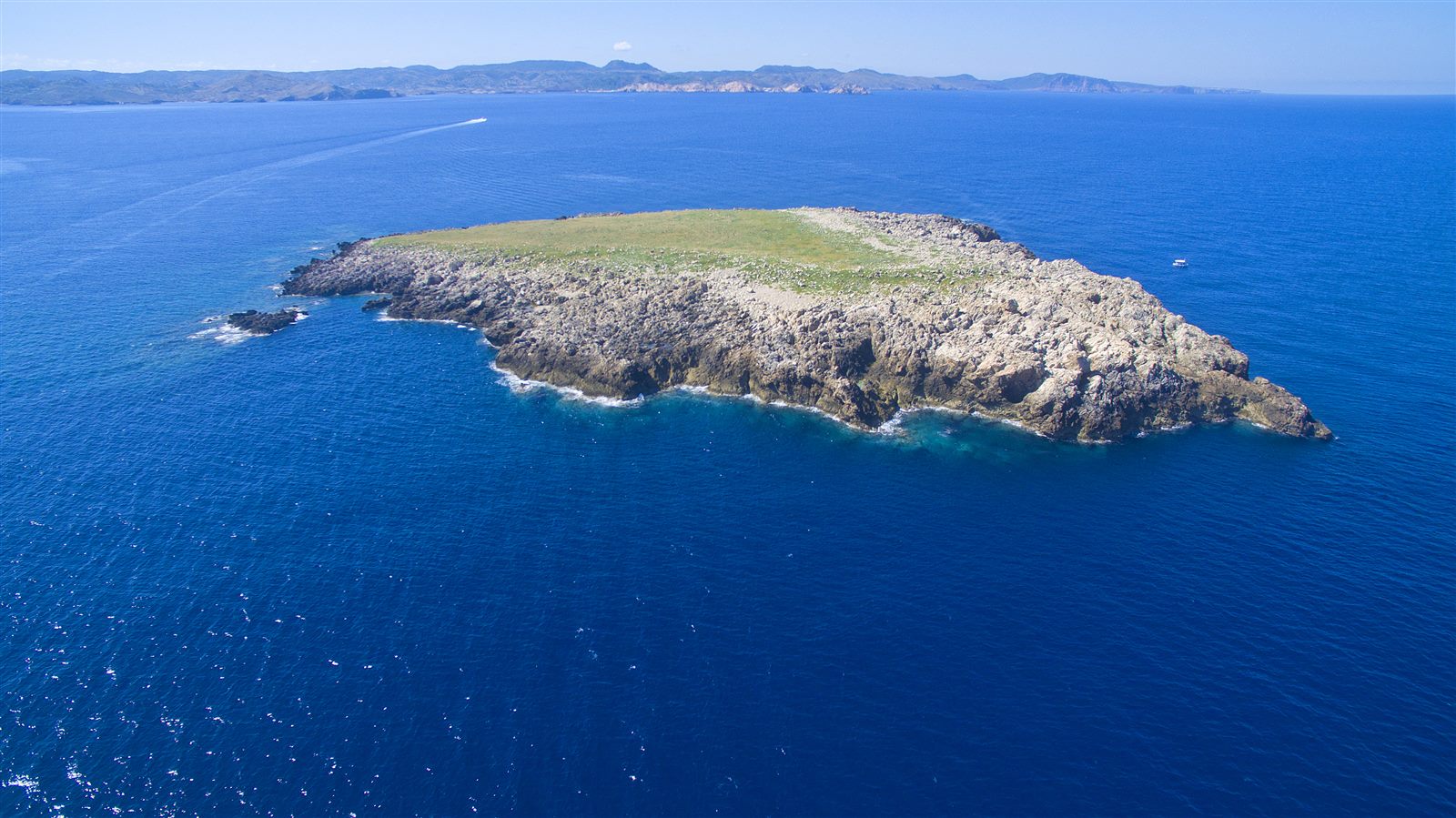
Near Cap de Cavalleria, Illa des Porros has a low, rocky profile surrounded by open blue water. Here, vegetation takes a back seat and the sea does most of the talking.
Menorca’s official coastal itinerary between Son Parc and Cavalleria places the islet close to the familiar lighthouse. It is a useful landmark when distinguishing it from other small islands with similar names.
A landscape does not always need a grand building. Sometimes a slab of rock and the tramontana are quite enough. The north wind has been arranging the scenery for centuries, with very little consultation. The Cavalleria area offers wonderful coastal views and a chance to appreciate this more exposed side of Menorca.
8. Illes Bledes: a little drama off Cala Barril
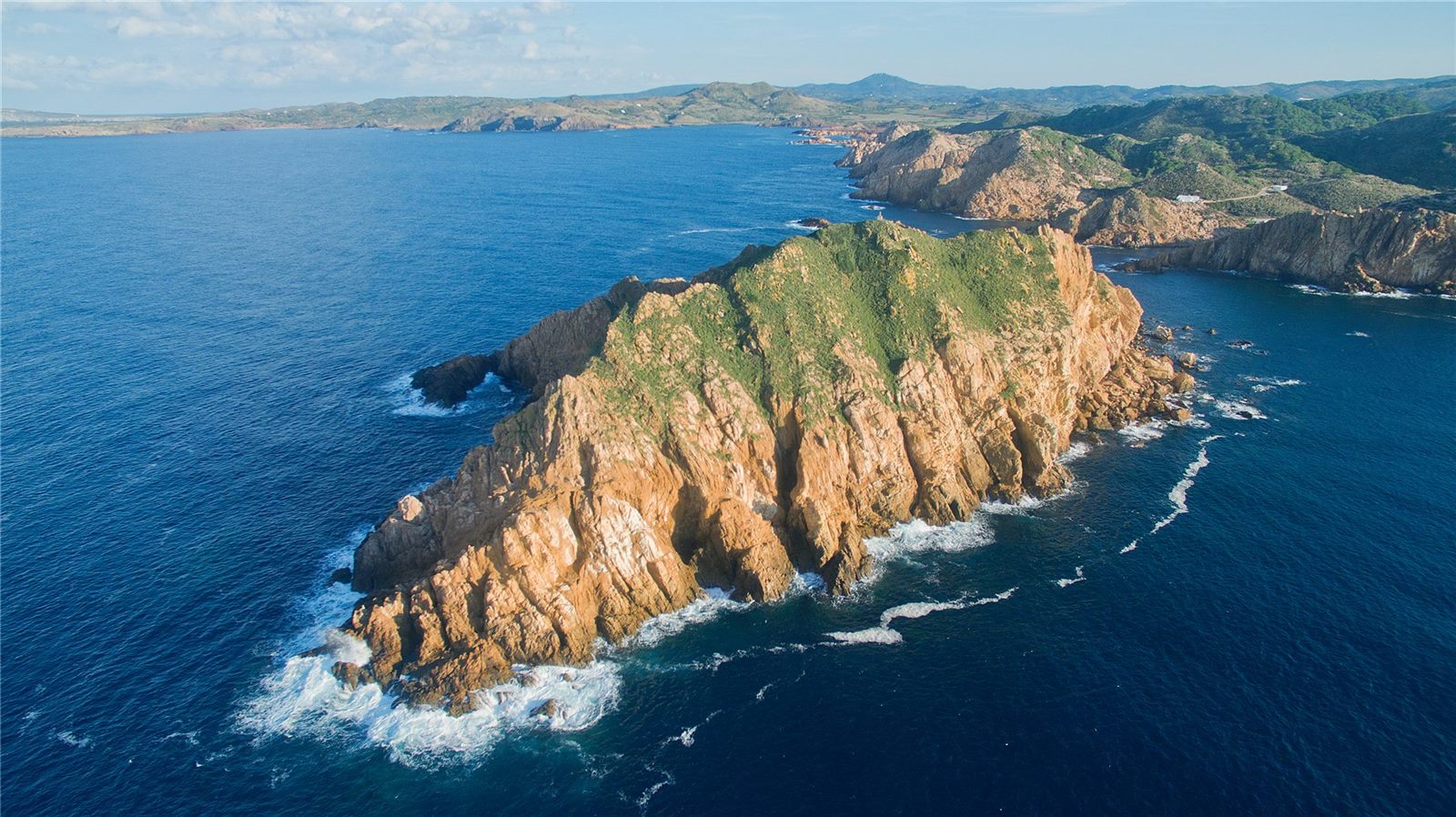
Off Cala Barril, Illes Bledes rises from the sea in steep slopes and craggy rock. The aerial photograph reveals both its striking outline and the rugged coastline beyond.
Beside Cap de s’Alairó, Illa de ses Bledes has a very different character from Menorca’s flatter islets. This is part of the pleasure of the north coast: round another headland and the scenery seems to have changed its mind.
Where Colom suggests a gentle morning of turquoise water, Bledes looks ready for an adventure story. No soundtrack is required; on a lively day, the sea supplies its own. Its appeal lies in that natural, unpolished character, best appreciated with care and a little distance.
How to enjoy the islets of Menorca
These islands do not all offer the same kind of visit. Isla del Rey and Lazareto have organised cultural visits, subject to their current programmes. Pinto is viewed from outside. For the natural islets, check the access conditions before planning an outing.
Take the wind and sea conditions seriously, and give wildlife, vegetation and the seabed the space they need. An island that looks close from a beach can be a very different proposition once you are on the water.
There is plenty to enjoy from dry land, too. The view of Isla del Aire from Punta Prima, the islands of Mahón harbour and the coastline around Cavalleria all reward a slower approach. You might also enjoy our article on September in Menorca, when there is a little more room to linger.
There is always another corner of Menorca to discover
You can know your favourite beach, your usual café and exactly where to watch the sunset, then notice a little island you have somehow overlooked for years. That is part of Menorca’s charm: familiarity never quite puts an end to discovery.
At Ses Moreres, we love the island for precisely these details. If exploring them starts you thinking about spending more of your life here, take a look at our homes and properties in Menorca. You need not buy an island of your own. A place that feels right, with a view you never tire of, is a very respectable start.
Which of these islets have you spotted, and which came as a surprise? We would love to hear in the comments.

Leave a Reply